Move to Improve: helping kids move more

What is Move to Improve?
Move to Improve (M2I) is a service based at Perth Children’s Hospital (PCH), embedded in a research framework, that supports children and adolescents with ongoing health conditions to increase their participation in physical activity.
M2I helps children and families to identify and overcome physical activity barriers and to reach their individualised physical activity goals, through a fun and family-centred approach.
M2I is a 5-year research project, and is currently funded until March 2028.
M2I has been developed in collaboration by consumers, researchers, and health professionals, and is delivered by a multi-disciplinary team, who assist children and adolescents to develop and achieve their own personal physical activity goals.
What does participating in M2I look like?
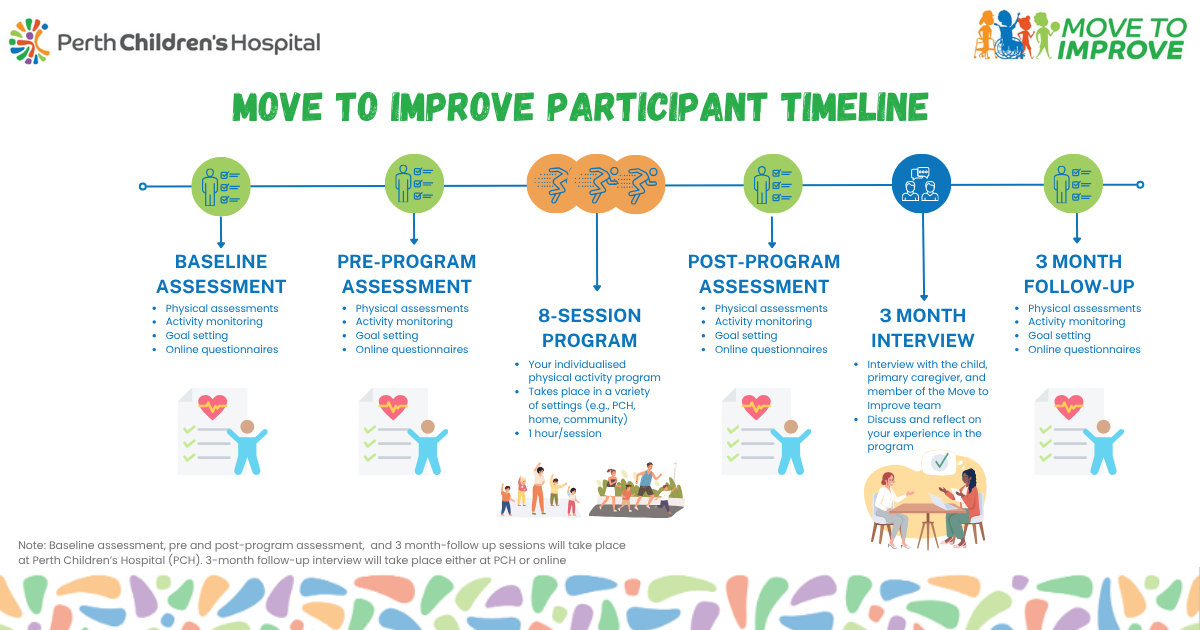
As part of the program, participants will:- Attend 2 initial assessment appointments at Perth Children's Hospital.
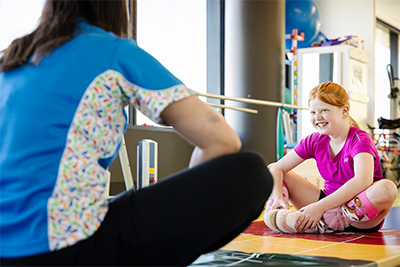
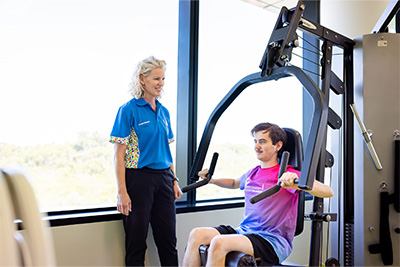
- Participate in 8 x 45 minute sessions (one session per week for 8 weeks) at Perth Children's Hospital and/or community locations, such as local recreation centres – with a senior physiotherapist or senior exercise physiologist.
- Attend a post-program assessment and a 3-month follow-up assessment.
- Take part in a short interview to share their experiences and help us improve the program.
Throughout the program, additional support from a clinical psychologist and senior dietitian is available where appropriate.
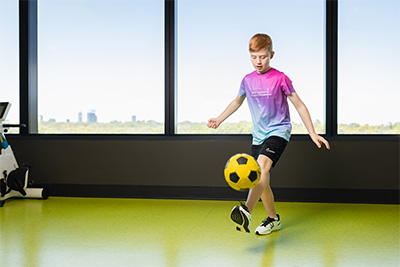
Your child/adolescent’s 8-week physical activity program will be developed around their individual goals, making their program unique to them. Their goal might be to get back into footy or to be able to walk to the local shops and back. Whatever it is, the Move to Improve team will design a program to help them achieve their goal and get them moving more.
Who is eligible?
Children may be eligible if they:- Are a current PCH outpatient living with a primary diagnosis of a chronic health condition.
- Aged 5-17 years living in the Perth metropolitan region.
- Willing and able to attend in-person physical activity sessions at trial sites (community sites or PCH).
- Ability to communicate (needs, wants, and desires) in spoken English or through an interpreter or augmentative and alternative communication.
- Receiving outpatient services through of one of the following medical departments: Adolescent Medicine; Burns; Cardiology; Dermatology; Endocrinology and Diabetes; Gastroenterology; General Paediatrics; Immunology; Kids Rehab; Metabolic Medicine; Nephrology; Neurology; Oncology and Haematology; Rare Care Centre; Respiratory; Rheumatology.
- Participants must remain under the care of a PCH medical team for the study period (a maximum of 12 months).
Referrals
Referrals to M2I are made by a child's treating medical team at PCH. Children remain under the care of their referring medical team while participating in the program.
Hear from our families:
Archie – 17, diagnosed with neuroblastoma at 3 years of age
Nora – 10, diagnosed with neuroblastoma at 8 months of age
Rhys – 17, type 1 diabetes
Rhys’s father wrote “I am the parent of Rhys, who was diagnosed with Type 1 diabetes at the age of 4, and this has been a significant disruption to our normally happy and healthy family dynamic. Rhys became quite withdrawn from his normal outdoor fun and engagement in social activities due to the cords and pumps he would need to manage. This now pretty much governs his inclusion in social and school activities.”“Since completing Move to Improve, Rhys has shown significant improvement in his participation in a variety of new activities and general personal management of his diet and health. The confidence and skills Rhys gained through the program have empowered him to set his own gym workouts and regular physical activities where the whole family can enjoy and participate.”
Anastasia – 9, cerebral palsy
Anastasia’s mum said: “Since completing Move to Improve, Anastasia now participates in a variety of activities. The confidence and skills she gained have empowered her to be involved in all sport activities, she is able to go in and out of the pool safely by herself (with supervision) and is more confident in the water.”“She is getting stronger, her walking and balance has improved. Her emotional regulation and growth mindset has also improved. Move to Improve has had a significant impact on Anastasia and our family.”
Funding partners
M2I has been made possible through funding from the Stan Perron Charitable Foundation and the Perth Children’s Hospital Foundation. The Child and Adolescent Health Service and The Kids Research Institute Australia have also committed in-kind support for the project.
Download our Frequently Asked Questions to find out more about M2I.
Videos
Published research:
-
Behaviour Change Techniques Involved in Physical Activity Interventions for Children With Chronic Conditions: A Systematic Review -
Move to Improve: Co-Designing a Hospital-Based Physical Activity Program for Children With Chronic Health Conditions -
Move to improve: protocol for a single-arm, pragmatic feasibility trial of an individualised physical activity programme for children with chronic conditions
Contact
P: (08) 6456 1111 (Option 6)
E: movetoimprove@health.wa.gov.au
This research project has been approved by the CAHS Human Research Ethics Committee (project reference number RGS0000008355).