

Welcome to your new baby: Attachment
Attachment
(Welcome to your new baby magazine, pages 4 to 6)
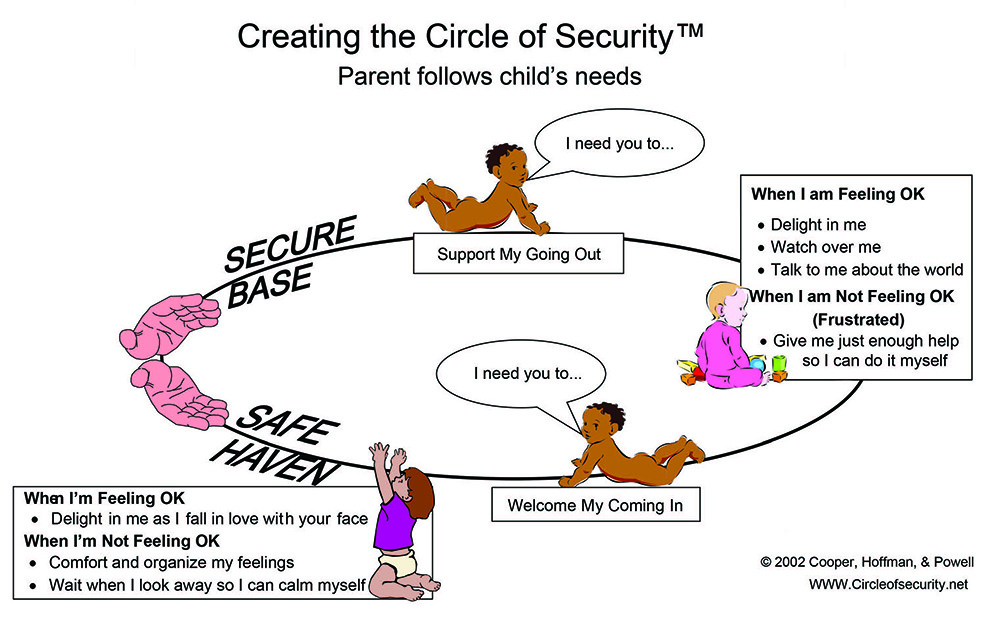
Attachment is the feeling of love and safety that babies have for their parents or the people who care for them most.When all goes well in the early months, babies develop secure attachment. They feel safe and loved – and this sets a pattern for the future.
Babies with secure attachment do better as they grow older. They know they’ll get support to explore and learn, and comfort when they need it. They also cope better when things go wrong.
Attachment seeking
Babies and toddlers seek attachment from the people who care for them by:- smiling and cooing
- crawling and following
- holding out their arms
- crying
- and many other signals that you’ll learn to know.
If a parent does not consistently respond, a baby will still feel anxious, frustrated or afraid, so keeps seeking attachment. Some babies who don't routinely get their emotional needs met may give up trying.
Helping children to feel safe first is the best way to encourage them to be brave, to explore and learn. Being calm and gentle with babies is hard in our busy lives. Try and slow down a bit, even if it means making changes to your lifestyle. Then you can be with your baby at a pace he can cope with, and you can see and respond to what he needs.
How can you help your baby have secure attachment?
Get to know your baby’s signals or cues so you know what he needs.This takes time – you’ll be guessing at first, but over time, you’ll know just what he means.
When you respond to your baby’s cues, it helps to build secure attachment.
Even young babies give signals that they need you, and other signals that show when they need you to do something different.
To show he needs you, your baby may:
- look at you
- make little noises
- smile
- copy your gestures
- look alert
- cry.
- look away
- shut his eyes
- try to struggle or pull away
- yawn
- look tense and unhappy
- cry.
All babies are different and will have their own special ways of showing what they need and the things they love to do with you.
Separation and sleep
Babies who have slept well for the first 6 months or so, but then start to wake at night or not want to go to sleep alone, may be feeling separation anxiety.They are afraid when their ‘special people’ are not there, especially at night. Babies don’t understand that you’re coming back soon, or in the morning. To them it can seem forever.
If this is a problem, your baby may sleep better if he knows you’re near. Try putting a mattress or chair near his cot and lying there when he wakes at night, or just keep his cot in your room until he’s a bit older.
What you need to know
Here are some ideas to give your baby a good start in life:Have realistic expectations
- Don’t expect your baby to do things he can’t. For example, you might think your baby’s trying to make you pick him up when he cries at night. But, when you are out of sight, he doesn’t know that you’re nearby.
- He’s crying because he needs something. If you come and comfort him when he cries, in time he’ll learn that the world is safe and he’ll cry less.
Spend time with your baby
- Learn to understand his messages. Young babies often give very small signals for what they need. Your baby needs you to learn his signals and how to respond to them.
A separate person with his own needs, wants and feelings
- Think about how it feels for your baby to be suddenly picked up without warning – to have his nappy changed – or to be handed to a stranger.
Get support
Have someone to talk things over with. You need someone to encourage you when you are doing well and to give you a break when you need it. It can be harder than you thought to learn about and respond to young babies. Parents need support too.Need help?
- Your local child health nurse
- Your family doctor
- Ngala Parenting Helpline (8am–8pm everyday) 9368 9368
Last Updated:
18/06/2021