
• Skip to main content
  • Skip to navigation
  • Accessibility
  • Contact Us
Government of Western Australia Crest
Government of Western Australia
Government of Western Australia Crest

Additional Menu

  • Accessibility
  • Contact us
Go to WA Government search
  • About us
    • About CAHS
    • Health Service Board
      • Frequently asked questions
    • Executive team
    • Our performance
    • Annual Reports
    • Strategies and plans
    • Acknowledgement of Country
    • Conduct standards
      • Public Interest Disclosure
      • Reporting misconduct
    • Annual Excellence Awards
    • Contact us
  • Our services
    • Neonatology
      • Neonatal Units
      • For parents and carers
      • Newborn Emergency Transport Service
      • The Perron Rotary Express Milk (PREM) Bank
      • Neonatal Follow up Program
      • Neonatology Clinical Research
      • Neonatology clinical guidelines
      • NETS WA clinical guidelines
      • Compliments and complaints
      • Neonatology Resources
      • Contact us
    • Community Health
      • Aboriginal Health Team
      • Child Health
      • Child Development Service
      • Immunisation
      • Refugee Health
      • School Health
      • Healthy Lifestyle Program
      • Bedwetting program
      • Compliments and complaints
      • Contact us
    • Mental Health
      • About us
      • Get help
      • Your healthcare rights
      • CAMHS Crisis Connect
      • Community CAMHS
      • Specialist services and day programs
      • Hospital services
      • Aboriginal Mental Health
      • For families and young people
      • Compliments and complaints
      • Contact us
    • Perth Children's Hospital
    • Children's Hospice Project
    • Community Hubs
    • First 1,000 Days Framework
  • For families and carers
    • COVID-19
      • Visiting CAHS sites
      • COVID-19 and children
      • Vaccination
      • Resources
    • Accessing or updating medical records
    • Being involved in your child's care
      • Your healthcare rights
      • Your child's medical record
      • Informed consent
      • Shared decision making
    • Consumer engagement
      • Become a consumer representative
      • Community Ambassador Program
      • Consumer groups and committees
      • Consumer Engagement Strategy
    • Compliments and complaints
      • Feedback form
      • You Said, We Did
      • Stars of CAHS Awards
    • Safety and quality of care
      • Preventing infections
      • Patient safety
      • Protecting the vulnerable
      • Listening and communicating with our consumers
    • QRious Health Hub for young people
    • Resources
    • Telehealth
  • For health professionals
    • Work with us
      • Careers at CAHS
      • Our vacancies
      • Why work for us?
    • Resources
      • Community Health Clinical Nursing Manual
      • Aboriginal child health resources
      • CAHS Clinical Disclaimer
      • Neonatology guidelines
      • Neonatology Postnatal Ward guidelines
      • Newborn Emergency Transport Service WA guidelines
      • Schools and Child Care
    • CAHS Medical Library
    • CAHS Child Safeguarding Unit
    • Referrals to our services
      • Community Health
      • Mental Health
      • Newborn Emergency Transport Service
  • Research
    • For families
    • For researchers
      • Ethics and governance
      • Support and development
      • Research Education Program
      • Events
      • Resources
    • Explore our research
      • ACORN project
      • Early Moves
      • FH in Kids
      • Food Allergy Clinical Research Program
      • Healthy Lifestyle Program
      • Move to Improve
      • Safer Care for Children in Hospital research program
      • Research by department
    • For industry and sponsors: clinical trials
  1. Home
  2. Our services
  3. Community Health
  4. Child Health
  5. Resources
  6. Magazines
  7. Welcome to your new baby: Your baby's teeth

Welcome to your new baby: Your baby's teeth

Welcome to your new baby: Your baby's teeth

Your baby’s Teeth

(Welcome to your new baby magazine pages 16 and 17.)

Teething

Babies are born with all their baby teeth already developing in their jaws.

Baby teeth come through at different times – some babies have a tooth at 6 months and most have some teeth by 12 months. 

See a dentist if your baby has no teeth by 18 months. 

By the time your baby is 3 years old, she should have all of her 20 baby teeth.

  • Some babies get their teeth without any problems. Others have sore gums every time a new tooth comes through. Her gums might be red and swollen and you can feel the hard point of the tooth underneath with your fingertip.
  • When your baby is teething, she may not be her usual self. She may want to bite on things, or go off her food and dribble. She may also wake more often at night for comfort.
  • Give your baby something firm to bite on such as a cold teething ring.
  • Some babies want firm things to chew on such as rusks – others like mushy food for a while.

If your baby seems very uncomfortable, your doctor may suggest using paracetamol.

If your baby is unwell when teething, such as developing a fever, a rash or diarrhoea, see your doctor, as these are not caused by teething.

Cleaning your baby’s teeth

You need to start looking after your baby’s teeth right from the start to ensure healthy teeth as she grows.
  • Even before her teeth arrive, wipe her gums after feeds using a damp, clean cloth if she’s awake.
  • Once she has the first tooth, use a small soft toothbrush but no toothpaste.
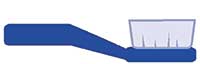
    Small soft toothbrush with no toothpaste
  • Don’t use toothpaste until she’s 18 months old.

    Small soft toothbrush with pea-sized amount of children's toothpaste
  • Between 18 months and 6 years, use a small pea-sized amount of children’s toothpaste.
  • Encourage your child to spit toothpaste out after brushing – not swallow or rinse.
Always put your child to bed with freshly cleaned teeth for a healthy smile.

Caring for teeth

  • Sugar or food acids can damage your baby’s teeth. Don’t put anything on your baby’s dummy or clean it with your mouth.
  • She only needs breast milk, or infant formula or cooled boiled water in a bottle or baby cup. Remove the bottle after a feed.
  • Don't put her to bed with a bottle.
  • Once she is 12 months old, she can drink tap water. Babies don’t need fruit juice or other sweet liquids.

Lift the lip

  • Lift your child’s lip at least once a month to check for early signs of decay, such as white lines along the gum line.
  • This can be reversed, so visit your dentist now.
  • More advanced decay can look like brown spots on the teeth. If left untreated, decay can quickly get worse.
  • See a dentist if you notice any changes in your child’s teeth.
For more information, visit:
  • Dental Health Services 
  • Give your child’s teeth a healthy start. 

Need help?

  • Your local child health nurse
  • Your family doctor
  • Ngala Parenting Helpline (8am–8pm everyday) 9368 9368

Last Updated: 19/01/2022
  • Facebook
  • Instagram
  • YouTube

Footer menu

  • wa.gov.au
  • Copyright
  • Disclaimer
  • Privacy
  • Sitemap
  • Contact Us

Brought to you by the Department of Health, Western Australia

© Government of Western Australia 2018 to