

Children and families help shape artworks for WA’s first children’s hospice
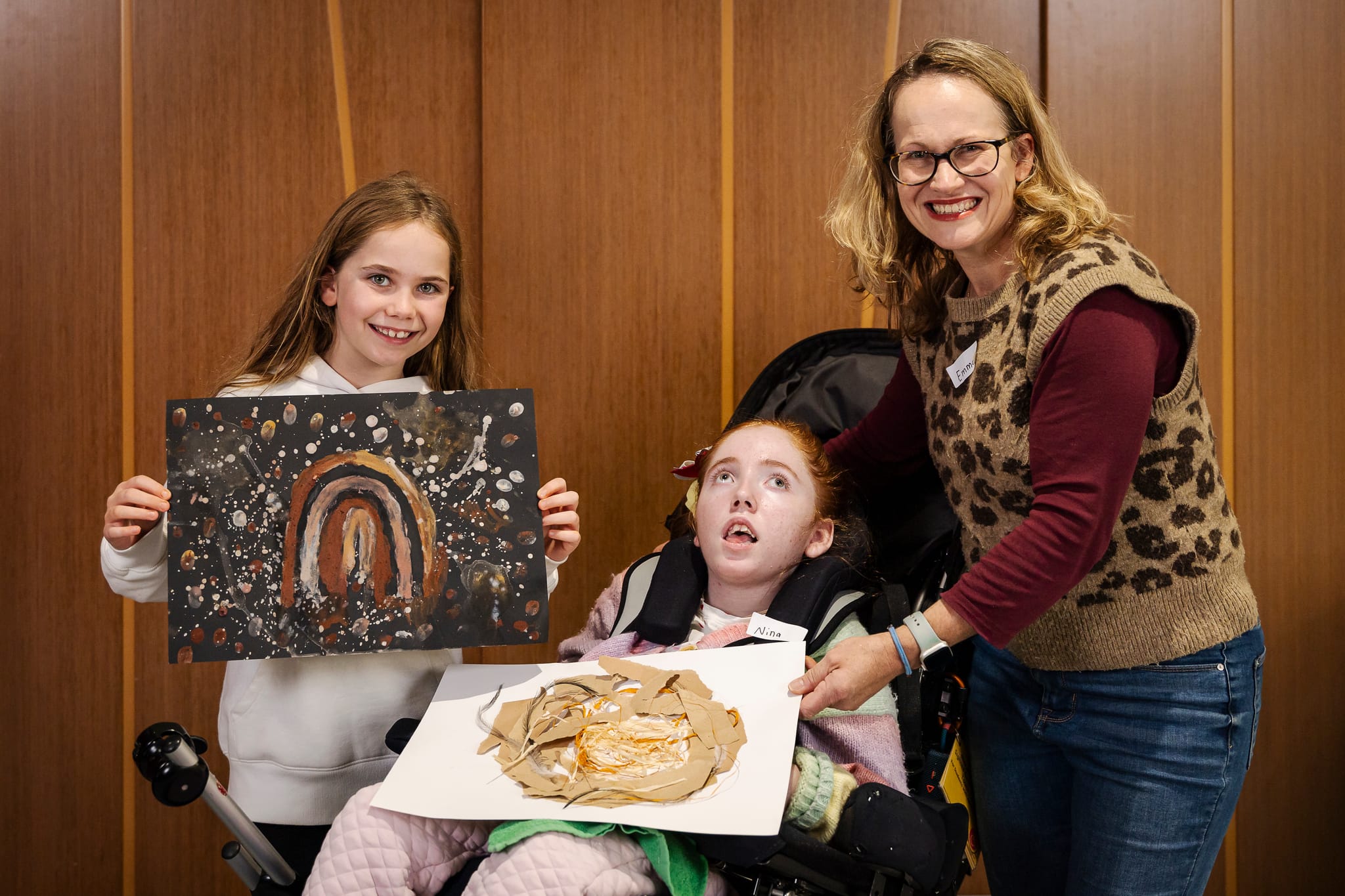 Art created with care for WA’s first children’s hospice
Earlier this month, children, families and volunteers contributed to creative workshops, helping shape integrated glass artworks for Sandcastles (Boodja Mia), WA’s first purpose-built children’s hospice.
Led by artists Sioux Tempestt and Julianne Wade and supported by the Child and Adolescent Health Service (CAHS), the workshop saw close to 30 families take part in creative activities to inform a series of printed-glass artworks that will be embedded in the rammed-earth walls of Sandcastles’ north garden and nature play zone.
Close to 40 children, including siblings, participated in the workshops, among them 10 children from nearby Swanbourne Primary School, and more than 15 children with life-limiting conditions who regularly attend Perth Children’s Hospital (PCH).
The resulting artworks will be transformed into eight circular glass inserts, each around 250mm in diameter, that will create subtle moments of colour, light and discovery throughout the outdoor environment.
Coordinated by WA art consultancy Apparatus, the workshop was designed to be calm, inclusive and accessible, using safe, low-mess and non-toxic materials suitable for children of different ages and abilities.
Creative activities included nest-building, natural pattern exploration, small “holding places” inspired by shelter and home, and soft weaving activities designed to support gentle participation, rhythm and connection.
The works respond to the curatorial vision “To Be Held”, reflecting Sandcastles as a place of care, protection, refuge and support for children with life-limiting conditions and their families.
The workshop also draws on the surrounding Swanbourne coastal bushland and broader cultural themes of Koort, Biddi, Moort, Boodjar and Karleep, acknowledging ideas of heart, pathways, family, Country and home.
Perth Children’s Hospital Foundation (PCHF) CEO Carrick Robinson said the artworks were part of Sandcastles’ broader commitment to creating a home-like sanctuary by the sea.
“This project is about more than the building. It is about creating a place where families can cherish precious time together, supported by care, comfort and dignity,” Mr Robinson said.
“The public art program helps bring that vision to life. It adds warmth, curiosity and authenticity to the space, helping Sandcastles feel less like an institution and more like a home.”
Delivered in partnership with the CAHS, Sandcastles will provide specialist respite, end-of-life care, family support and a statewide bereavement service for children with life-limiting conditions and their families.
Dr Lisa Cuddeford, Head of Department, Paediatric Palliative Care and Hospice Service at PCH said the workshop reflected the deep care being taken to ensure Sandcastles feels welcoming, warm and family-centred.
“Sandcastles is being created as a place where children and families can feel held, supported and at home,” Dr Cuddeford said.
“These artworks are a beautiful example of how every detail of Sandcastles is being considered – not only the clinical care, but the environment, the feeling of warmth, and the moments of discovery that children and families will experience.”
“By inviting children, families and volunteers to contribute to the creative process, these artworks will carry the voices, stories and imagination of the people at the heart of this project.”
Artist Sioux Tempestt said the workshop was designed to allow every participant to contribute in a way that felt comfortable and meaningful.
“The activities were intentionally gentle, flexible and accessible,” Ms Tempestt said. “Some children may spend a long time creating, while others may only have the energy to contribute a small piece – and both are equally meaningful.”
Whadjuk/Tainui artist Julianne Wade said the workshop invited children and families to explore ideas of home, shelter, rhythm and togetherness through natural materials and shared making.
“The process was about creating a calm space where children and families could make side by side,” Ms Wade said.
“The idea of a small holding place, or shelter, connects beautifully with the purpose of Sandcastles – a place where families can feel supported, protected and cared for.”
Apparatus Director Helen Curtis said the workshops were intentionally designed to ensure children’s voices and creative expression became part of the fabric of the hospice itself.
“We wanted the hospice to include authentic creative contributions from young people and families so the artworks feel personal, welcoming and deeply connected to the people who will spend time there,” she said.
“The glass inserts form part of a broader integrated suite of artworks specifically designed for the hospice environment, informed by therapeutic design principles that support wellbeing, calm and comfort for children and families.”
Upon completion, Sandcastles will be a self-contained, home-like sanctuary; a seven-bed facility built close to the beach and nature near Swanbourne Beach.
State government funding covers commissioning and clinical operations, while PCHF is responsible for funding construction, fit-out and ongoing non-clinical support – the environment, experiences and services that go beyond healthcare.
The design includes family rooms, a main kitchen, dining and living space, playrooms, a physical treatment area inclusive of hydrotherapy pool, clinical spaces, outdoor living, play space, seating, parking, and administrative spaces.