
• Skip to main content
  • Skip to navigation
  • Accessibility
  • Contact Us
Government of Western Australia Crest
Government of Western Australia
Government of Western Australia Crest

Additional Menu

  • Accessibility
  • Contact us
Go to WA Government search
  • About us
    • About CAHS
    • Health Service Board
      • Frequently asked questions
    • Executive team
    • Our performance
    • Annual Reports
    • Strategies and plans
    • Acknowledgement of Country
    • Conduct standards
      • Public Interest Disclosure
      • Reporting misconduct
    • Annual Excellence Awards
    • Contact us
  • Our services
    • Neonatology
      • Neonatal Units
      • For parents and carers
      • Newborn Emergency Transport Service
      • The Perron Rotary Express Milk (PREM) Bank
      • Neonatal Follow up Program
      • Neonatology Clinical Research
      • Neonatology clinical guidelines
      • NETS WA clinical guidelines
      • Compliments and complaints
      • Neonatology Resources
      • Contact us
    • Community Health
      • Aboriginal Health Team
      • Child Health
      • Child Development Service
      • Immunisation
      • Refugee Health
      • School Health
      • Healthy Lifestyle Program
      • Bedwetting program
      • Compliments and complaints
      • Contact us
    • Mental Health
      • About us
      • Get help
      • Your healthcare rights
      • CAMHS Crisis Connect
      • Community CAMHS
      • Specialist services and day programs
      • Hospital services
      • Aboriginal Mental Health
      • For families and young people
      • Compliments and complaints
      • Contact us
    • Perth Children's Hospital
    • Children's Hospice Project
    • Community Hubs
    • First 1,000 Days Framework
  • For families and carers
    • COVID-19
      • Visiting CAHS sites
      • COVID-19 and children
      • Vaccination
      • Resources
    • Accessing or updating medical records
    • Being involved in your child's care
      • Your healthcare rights
      • Your child's medical record
      • Informed consent
      • Shared decision making
    • Consumer engagement
      • Become a consumer representative
      • Community Ambassador Program
      • Consumer groups and committees
      • Consumer Engagement Strategy
    • Compliments and complaints
      • Feedback form
      • You Said, We Did
      • Stars of CAHS Awards
    • Safety and quality of care
      • Preventing infections
      • Patient safety
      • Protecting the vulnerable
      • Listening and communicating with our consumers
    • QRious Health Hub for young people
    • Resources
    • Telehealth
  • For health professionals
    • Work with us
      • Careers at CAHS
      • Our vacancies
      • Why work for us?
    • Resources
      • Community Health Clinical Nursing Manual
      • CAHS Clinical Disclaimer
      • Neonatology guidelines
      • Neonatology Postnatal Ward guidelines
      • Newborn Emergency Transport Service WA guidelines
      • Schools and Child Care
    • CAHS Medical Library
    • CAHS Child Safeguarding Unit
    • Referrals to our services
      • Community Health
      • Mental Health
      • Newborn Emergency Transport Service
  • Research
    • For families
    • For researchers
      • Ethics and governance
      • Support and development
      • Research Education Program
      • Events
      • Resources
    • Explore our research
      • ACORN project
      • Early Moves
      • FH in Kids
      • Food Allergy Clinical Research Program
      • Healthy Lifestyle Program
      • Move to Improve
      • Safer Care for Children in Hospital research program
      • Research by department
    • For industry and sponsors: clinical trials
  1. Home
  2. News
  3. 2022
  4. 08
  5. 08
  6. Research study uncovers evidence to help young patients with rheumatic heart disease

Research study uncovers evidence to help young patients with rheumatic heart disease
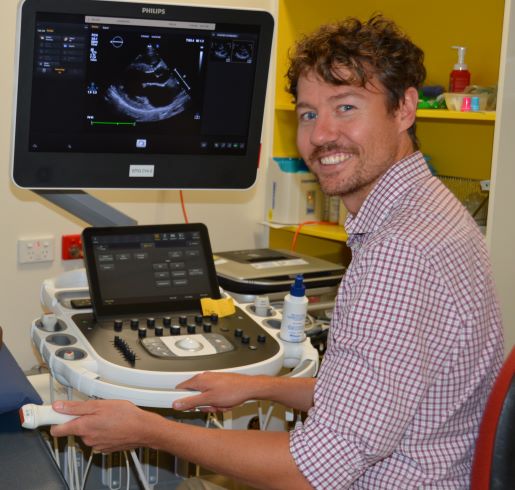
Research study uncovers evidence to help young patients with rheumatic heart disease

Dr Bradley McDonald reviewing an echocardiogram PCH paediatrics registrar Dr Bradley McDonald
10/08/2022

A 17-year look-back at more than 500 echocardiograms of WA children and teenagers with rheumatic heart disease (RHD) has revealed important insights into which young patients with heart problems may remain stable without a cardiac procedure or surgery if they experience no further episode of rheumatic fever.

The first of its kind study is expected to inform management protocols worldwide and also assist Perth Children’s Hospital (PCH) doctors to get their patients back home quicker to be monitored by outreach clinics – including those from small remote isolated Aboriginal communities who had never left their region before.

Conducted by PCH paediatrics registrar Dr Bradley MacDonald, with results published in the Journal of the American Society of Echocardiography, the research findings are important for WA as Australia has one of the highest reported rates of acute rheumatic fever (ARF) and rheumatic heart disease (RHD) in the world. The highest incidence is in Aboriginal communities, particularly across Australia’s northern and central regions.

“From our findings, there is a suggestion that we can be a little bit more relaxed and should now watch and wait in moderate and mild patients,” Dr MacDonald said.

“We still have to closely monitor these patients and catch up regularly but from a heart perspective we now know from the study findings that we should not rush into surgery or intervention because their heart inflammation and valvular damage may settle down. Heart function may get better and closer towards normal over time.”

In a bid to identify markers for progression of disease and future likelihood of need of a cardiac procedure or surgery, Dr MacDonald’s research looked at heart changes visible on echocardiograms through a retrospective cohort study of 146 patients from 2004 -2020.

Focusing on those aged 5 to 14-years-old, at least three echocardiograms were reviewed for each patient to track changes in the left side of the heart, known as left ventricular remodelling. The study is the first of its kind to do this in a paediatric population for ARF and RHD patients.

Rheumatic heart disease develops as a result of an abnormal immune reaction to ARF, which is caused by a sore throat or skin sores resulting from a Strep A bacterial infection.

Typically, the damaged heart valve cannot open or shut properly, interfering with blood flow through the heart. Without treatment in severe cases, the damaged heart valve may continue to deteriorate and lead to permanent disability and premature death.

“The aim of our research was to describe the natural history of the heart over the course of this disease,” said Dr MacDonald. “The issue to date is that we know some of the factors that contribute to the progression of disease, but we do not know all of them.

“Through our look-back study of echocardiograms, we are now uncovering this story of the left side of the heart and the heart changing over the course of this pathology.”

Dr MacDonald was awarded a Telethon Fellowship in 2019 which provided the initial funding support for this project. This study was also part of his PhD studies through The University of Western Australia School of Population and Global Health. Dr MacDonald is also a member of the Telethon Kids Institute’s Strep A and Rheumatic Heart Disease team and Skin team.

He said Australia was well placed to lead research into ARF and RHD, as developing countries with high rates did not have the same tertiary medical facilities to support such treatment-informing studies. Globally, more than 15 million people are estimated to have RHD.

“I have worked in cardiology at PCH and seen the extreme ends of this disease, the impact on families and the challenges that it brings,” Dr MacDonald said.

“A lot of our kids that we see are from the Kimberley and it can be traumatic for them spending significant time away from family and social support while in Perth seeking treatment.

“Getting them back home as quickly as possible is important.” 


Previous Next
Last Updated: 11/08/2022
  • Facebook
  • Instagram
  • YouTube

Footer menu

  • wa.gov.au
  • Copyright
  • Disclaimer
  • Privacy
  • Sitemap
  • Contact Us

Brought to you by the Department of Health, Western Australia

© Government of Western Australia 2018 to